Agricultural and Biofuel News - ENN

Sunday, September 15, 2013

6 Scrumptious Meals You Can Cook in a Dishwasher (Yes, You Read That Right)

dishwasher cooking, how to cook in your dishwasher, dishwasher meals, weird cooking tips, washing dishes and cooking, dishwasher cooking recipes, dishwasher recipes dishwasher cooking, how to cook in your dishwasher, dishwasher meals, weird cooking tips, washing dishes and cooking, dishwasher cooking recipes, dishwasher recipes dishwasher cooking, how to cook in your dishwasher, dishwasher meals, weird cooking tips, washing dishes and cooking, dishwasher cooking recipes, dishwasher recipes dishwasher cooking, how to cook in your dishwasher, dishwasher meals, weird cooking tips, washing dishes and cooking, dishwasher cooking recipes, dishwasher recipes dishwasher cooking, how to cook in your dishwasher, dishwasher meals, weird cooking tips, washing dishes and cooking, dishwasher cooking recipes, dishwasher recipes dishwasher cooking, how to cook in your dishwasher, dishwasher meals, weird cooking tips, washing dishes and cooking, dishwasher cooking recipes, dishwasher recipes Dishwasher Cooked Poached Salmon, dishwasher cooking, how to cook in your dishwasher, dishwasher meals, weird cooking tips, washing dishes and cooking, dishwasher cooking recipes, dishwasher recipes

Read the rest of 6 Scrumptious Meals You Can Cook in a Dishwasher 
(Yes, You Read That Right)

he idea of cooking salmon in your dishwasher is a pretty well known kitchen parlor trick that, 
by itself, ends up wasting a lot of power and water. However, in a recent NPR segment, a 
pioneering food writer of dishwashing cuisine named Lisa Casali says she has figured out a 
trendy new way of using heat sealed containers—such as canning jars and food vacuum bags—
to cook all her food while cleaning a full rack of dirty dishes. Talk about multitasking... Suddenly 
cooking with your dishwasher doesn't sound so crazy. Instead, it’s actually an economical, and 
not to mention, environmentally friendly way to cook. It will also keep your house cooler (no 
running oven) and you won’t have to watch over it or worry about burning your meal. We've rounded 
up a small sample of six meals that you could be throwing into your dishwasher right now!

via INHABITAT 

Saturday, September 14, 2013

Food and Sustainability Leaders- Video Playlist Guide

Originally published on Cooking Up a Story

This video playlist guide features some of the most thoughtful, and articulate thought-leaders who contemplate the defining challenges facing society in the 21st century. Whether it's relating to global food and energy production, climate change, water scarcity, the ability of nations (including our's) to produce their own food, reduce poverty and misery, and defining the proper role of government in our lives—these are the kinds of big-picture sustainability issues that are represented in the talks and interviews below. Most (if not all) of these videos remain as relevant, perhaps even more prescient with the short passage of time than when many of them were first published in 2009 and 2010.
    Joel Berg, homeless advocate

  • JOEL BERG
    Joel Berg, executive director of the New York City Coalition Against Hunger (NYCCAH), and author of the book All You Can Eat: How Hungry Is America, is a fierce food advocate for the poor in America. Perhaps, as a society we should pay more attention to people like Berg whose organizations are on the frontline dealing with people in economic distress, everyday.


  • Mark Bittman, author of Food Matters

  • MARK BITTMAN
    New York Times Columnist, author of How To Cook Everything, discusses his book Food Matters: A Guide to Conscious Eating.


  • Jonathan Bloom, author of American Wasteland: How America Throws Away Nearly Half of Its Food

  • JONATHAN BLOOM
    40% of the food we produce gets thrown out! Jonathan Bloom, Journalist, food waste crusader, and author of author of American Wasteland: How America Throws Away Nearly Half of Its Food, shares what he has uncovered.


  • Claire Hope Cummings, author of Uncertain Peril: Genetic Engineering and the Future of Seeds

  • CLAIRE HOPE CUMMINGS
    In this 4-part series, journalist, environmentalist, and author of Uncertain Peril: Genetic Engineering and the Future of Seeds, Claire Hope Cummings speaks out on behalf of the natural world, and for a new approach to solving the environmental, social, and philosophical problems inherent in our present food system.


  • Curt Ellis , King Corn Documentary

  • CURT ELLIS
    Curt Ellis talks about his documentary King Corn in this 3-part series.


  • Dan Imhoff talking about the federal food and farm bill

  • DANIEL IMHOFF
    Food activist and author Daniel Imhoff provides historical information about the federal Food and Farm Bill, the single largest program effecting farmers and those who are poor. Imhoff also talks about some of the important issues that define the then upcoming 2008 Farm Bill Legislation (6-parts). In addition, a talk that Dan Imhoff gave to the Friends of Family Farmers, an Oregon advocacy organization that supports local family farmers, about his latest book CAFO: The Tragedy of Industrial Animal Factories.


  • Joan Dye Gusso discusses her book This Organic Life.

  • JOAN DYE GUSSOw
    Joan Dye Gussow talks about her life, and her book This Organic Life that tells the story of how Joan Dye Gussow began her first garden and her long quest to change the food system.

  • Alan Kapuler, founder of Peace Seeds

  • ALAN KAPULER
    Alan Kapuler is a public domain organic seed breeder, and is often regarded as the founding father of the organic seed movement. This 5-part series explores the depth and passion of this scientist whose important work continues in the field developing open pollinated public domain plants that produce seeds that can be reused and shared freely for the public good.


  • Fred Kirschenmann Leopold Center for Sustainable Agriculture

  • FRED KIRSCHENMANN
    A long-time leader in the sustainable agriculture movement, a Distinguished Fellow at the Leopold Center for Sustainable Agriculture, and a third-generation farmer, offers some thoughtful reflections upon the future of agriculture.


  • David Korten, author of When Corporations Rule the World

  • DAVID KORTEN
    David Korten, author of When Corporations Rule The World, minces no words about the dangers our capitalist system poses to democracy in his interview with us. Korten also gives a talk about his newer book, Agenda For a New Economy where he describes the current state of our economy and society—he claims is largely shaped by the most effective (and cynical) educational tool ever devised: mass media advertising.


  • Deborah Madison, author of Vegetable Literacy

  • DEBORAH MADISON
    Deborah Madison's new cookbook "Vegetable Literacy" draws inspiration for its recipes directly from the garden. In this 2-part series, Madison talks about her latest book, and how her own garden has helped her expand upon what she prepares in the kitchen.


  • Raj Patel, author of The Value of Nothing

  • RAJ PATEL
    Raj Patel, author of The Value of Nothing, explains what food sovereignty means, and why people around the world are fighting to have a say in their own food system.


  • Anna Lappé, food activist and author of Diet for a Hot Planet: The Climate Crisis at the End of Your Fork and What You Can Do About It

  • ANNA LAPPÉ
    While carefully connecting the dots between industrial agriculture, and climate change, food activist and author Anne Lappé underlines the inherent weaknesses of conventional agriculture, and the terrible costs to the planet if we do not reform our food system.


  • Ken Meter, Local Food Systems Expert

  • KEN METER
    In this 3-part series, expert food system analyst Ken Meter, defines what constitutes a strong local food system, and why it's so important to the health and well-being of a region.


  • Carlo Petrini, founder of Slow Foods

  • CARLO PETRINI
    Carlo Petrini, founder of Slow Food International shares his views about food, politics, and American culture on the road to a sustainable food nation. Alternating between light-hearted humor and searing political insight, Petrini delivers an explosive commentary on American society, and what it means to have a good, clean, and fair food system.


  • Michael Pollan

  • MICHAEL POLLAN
    In this 3-part series, Deborah Kane from the Portland-based environmental organization Ecotrust talks with Michael Pollan about his book In Defense of Food. Introducing terms like "nutritionism" and describing much of our modern food diet as being comprised of highly processed "food-like substances", Pollan cautions against fully embracing the science behind nutrition because it has not served us well in the 20th century. For those attracted to the wealth of products on the market tauting the latest beneficial nutrients (Omega-3 fatty acids, antioxidants, vitamin C, etc.), Pollan offers a more traditional approach: eat more whole foods (less highly processed foods), eat less meat, and more plant-based foods.


  • Paul Roberts, author of the Future of Food

  • PAUL ROBERTS
    Paul Roberts, veteran journalist, and author of The End of Food, talks about the consequences of our industrial agricultural system. Though he points out, there have been successes, they have come at a steep cost to the environment, and many of them are proving not to be of lasting value.


  • Vandana Shiva, The Future of Food

  • VANDANA SHIVA
    This 3-part series of interviews with Dr. Vandana Shiva about the future of food is one of the most contentious, revolutionary, profound, and important discussions of any we have had to date on Food News. This is more than about the safety of biotechnology; it's about the ability to have a choice in the foods that we eat, and for our farmers to be able to freely re-use their own seeds, to grow food in the manner that they choose. In developing countries, the ability to avoid falling into a hopeless cycle of debt brought upon them from the high risk proposition that the biotechnology regime imposes upon first-world farmers.


  • Ann Vilesis, author of Kitchen Literacy

  • ANN VILEISIS
    Ann Vileisis, author of Kitchen Literacy, explores the fundamental question, what do we know about our food, and how did we come to acquiring this knowledge. By examining our more recent history, Vilesis sheds light on the profound role mass advertising has played in shaping public opinion in developing our modern food culture.

  • The post Food and Sustainability Leaders- Video Playlist Guide appeared first on Cooking Up a Story.


    via Cooking Up a Story http://feedproxy.google.com/~r/CookingUpAStory/~3/8AxY_Q5T0Bc/story01.htm


    Friday, September 13, 2013

    Out today! Eat, Drink, Vote: An Illustrated Guide to Food Politics


    Three items:
    1.  The Cartoonist Group is sponsoring a caption contest.  The winner gets a signed copy of the book.
    2.  If you live in New York: copies will be available at the Union Square farmers' market tomorrow (Wednesday) from noon to 1:30 p.m.
    3.  If you'd like a preview, here's what Nanci Hellmich says about it in today's USA Today ( This online version comes with a generous helping of  interactive cartoons): 

    Cartoons poke fun at weight, diet and food politics 

    A new book, "Eat, Drink, Vote," has more than 250 cartoons that take a humorous look at food topics.
    STORY HIGHLIGHTS
    • Nutrition professor Marion Nestle says cartoons can spotlight food politics
    • She shares more than 250 of her favorite cartoons in her new book
    • Her goal: Have people get active in food politics
    When it comes to diet, weight and food politics in this country, cartoons often make the messages easier to swallow.
    Cartoons and comics can convey "complicated conceptual information at a glance, and if they are good, make it funny, pointed, sharp, ironic and sometimes even sarcastic," says Marion Nestle, a longtime nutrition professor at New York University and veteran consumer advocate. "In one drawing, cartoonists can convey not only what the idea is about, but what they think about it."

    Nestle shares more than 250 of her favorite cartoons and comics in her new book, Eat, Drink, Vote: An Illustrated Guide to Food Politics(Rodale Books, $18.99) created in collaboration with The Cartoonist Group.
    For years, Nestle has hounded the food industry about its marketing strategies, which she detailed in her 2002 book, Food Politics. In 2006, she detailed how to grocery shop for a healthful diet in What to Eat, and in 2012 she discussed the latest science on what causes people to be overweight in Why Calories Count, written with Malden Nesheim.
    Nestle believes that the obesity problem is this country is fostered by a food environment that encourages people to eat more often, in more places and in larger amounts than is good for maintaining a healthy weight.

    About a third of adults in this country are obese, which is roughly 35 or more pounds over a healthy weight. A third of children and teens are overweight or obese. Obesity increases the risk of many diseases including type 2 diabetes, heart disease and some types of cancer.
    Beginning in the 1980s when obesity rates in this country started to climb, food became more widely available with the proliferation of fast-food places and the increase in portion sizes, she says. People started eating outside of the home more often and snacking more frequently, Nestle says. 
    She says the current food environment results from the need of food companies not only to make a profit but to report an increase in profits to Wall Street every 90 days — and do so in a highly over-abundant and fiercely competitive marketplace. To lose weight, she says, people have to eat less, but eating less is terrible for business. Hence: politics.
    Nestle says there are many examples of what she considers food politics run amok. One case in point: The U.S. Department of Agriculture established new nutrition standards for school lunches that went into effect in the 2012-2013 school year. But bowing to pressure from food companies, "Congress insisted that the USDA count the tomato paste on pizza as a serving of vegetables," Nestle says.
    "It's ridiculous to have Congress micromanaging school food rules. Several cartoons in the book make that point brilliantly."
    About the book, Nestle says: "I want these cartoons to inspire readers to become active in food politics, personally and politically. You can buy food at farmers markets, go to grocery stores that sell healthier foods, support locally grown food and organic food, support animal welfare.
    "There are loads of ways to choose foods and diets that will be healthier for people and the planet. Everyone who's interested can join groups that are working for policies that will make healthy food choices the easy choices."

    Vote with your fork, she says. "Even better, vote with your vote!"

    And #4: a couple of other items related to the book:

    August 31 Review in the San Francisco Chronicle
    August 14 Interview with Kerry Trueman on Amazon.com


    via Food Politics http://www.foodpolitics.com/2013/09/out-today-eat-drink-vote-an-illustrated-guide-to-food-politics/


    Thursday, September 12, 2013

    The Upanishads and other thanks for food

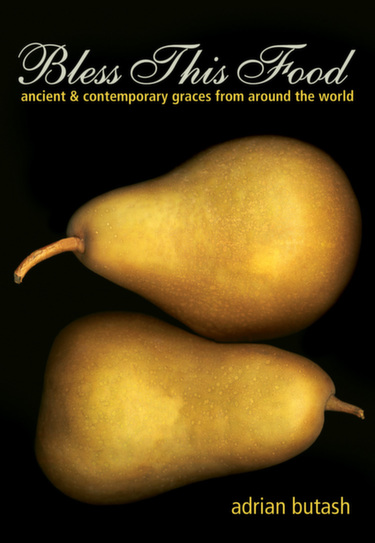
    I love collections on obscure (and sometimes not so obscure) food themes.  This book collects prayers, incantations, and thanks for food from may cultures.

    Adrian Butash.  Bless This Food: Ancient and Contemporary Graces from Around the World.  New World Library, 2013.

    BlessFood_pbk_cvr.indd
    In addition to the expected Christian prayers giving thanks for what is about to be consumed, the book has others, like this one from the Upanishads:
    I am food, I am food, I am food.
    I am the food-eater, I am the food-eater, I am the food eater.
    I am the combining agent, I am the combining agent, I am the combining agent.
    …I, who am food, eat the eater of food.  I have overcome the world.  I am brilliant like the sun.
    A thought for the start of the weekend.  Enjoy!


    via Food Politics http://www.foodpolitics.com/2013/08/the-upanishads-and-other-thanks-for-food/


    Wednesday, September 11, 2013

    World’s Largest Polar Bear Puppet to Lead a Global Day of Arctic Action

    aurora, polar bear, greenpeace, shell, arctic oil, climate change
    As the ice sheets melt from climate change, Shell is poised to begin a new drilling campaign in the Arctic. That is, if they can make their way past a polar bear the size of a double-decker bus. Greenpeace has commissioned Christopher Kelly to create a massive puppet that symbolizes the plight of the poles. Dubbed "Aurora", the bear will lumber past some of London's most iconic landmarks on its way to the Shell headquarters on the South Bank.
    aurora, polar bear, greenpeace, shell, arctic oil, climate change aurora, polar bear, greenpeace, shell, arctic oil, climate change

    Read the rest of World's Largest Polar Bear Puppet to Lead a Global Day of Arctic Action

    via INHABITAT http://inhabitat.feedsportal.com/c/34923/f/648037/s/30c256c1/sc/10/l/0Linhabitat0N0Cworlds0Elargest0Epolar0Ebear0Epuppet0Eto0Elead0Ea0Eglobal0Eday0Eof0Earctic0Eaction0C/story01.htm